Visual Reference
Doodle Coat Colors & Patterns
A visual guide to the colors and markings you'll see in our Cavapoo, Bernedoodle, and Australian Mountain Doodle litters.
Doodle coat color is determined by genetics, and many puppies shift shade as they mature — so the puppy you bring home may look different at two years old than at eight weeks. Color is a secondary consideration behind health, temperament, and structure, but we know it's part of falling in love. Use this guide to learn the names of the coats you'll see in our litters.
Red / Ruby
Also called: Mahogany, ruby (in Cavaliers), deep copper
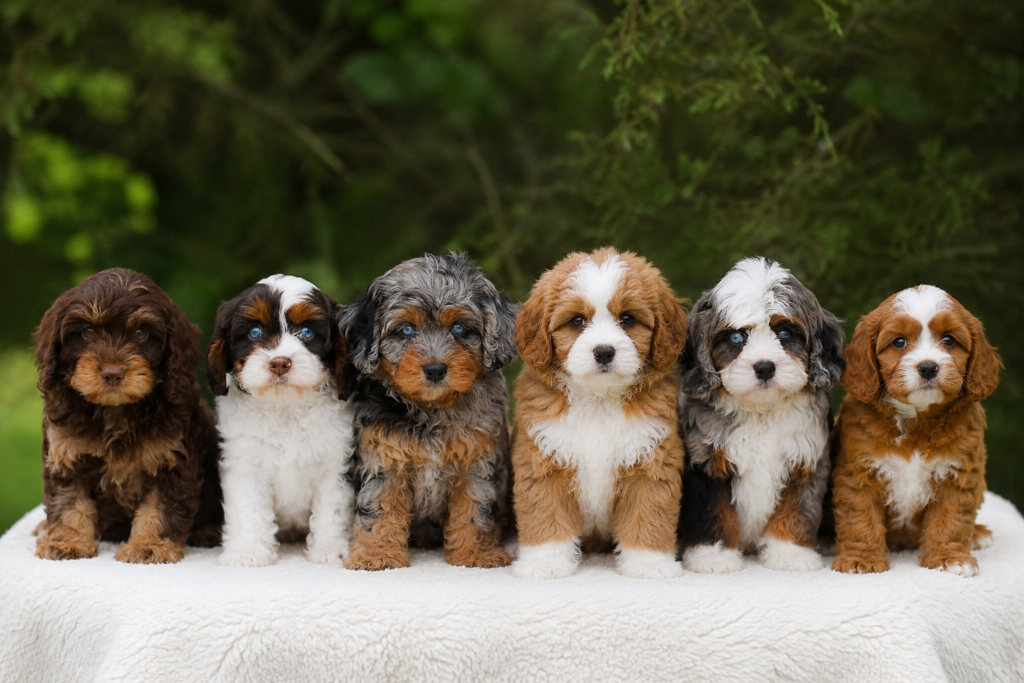
A rich, saturated rust or mahogany that stays deep into adulthood. In Cavapoos, "ruby" specifically refers to the solid red Cavalier coat with no white markings. Nose and eye rims are black.
- Common in
- Cavapoo (common), Bernedoodle (rare, usually in an F1b or multigen)
- Does it change?
- The deepest reds hold well, though most will soften a shade or two by two years old. A red from two red parents holds color best.
Caption
Caption
Caption
Tri-Color (Traditional / Bernese)
Also called: Trad tri, Bernese tri, black-white-rust
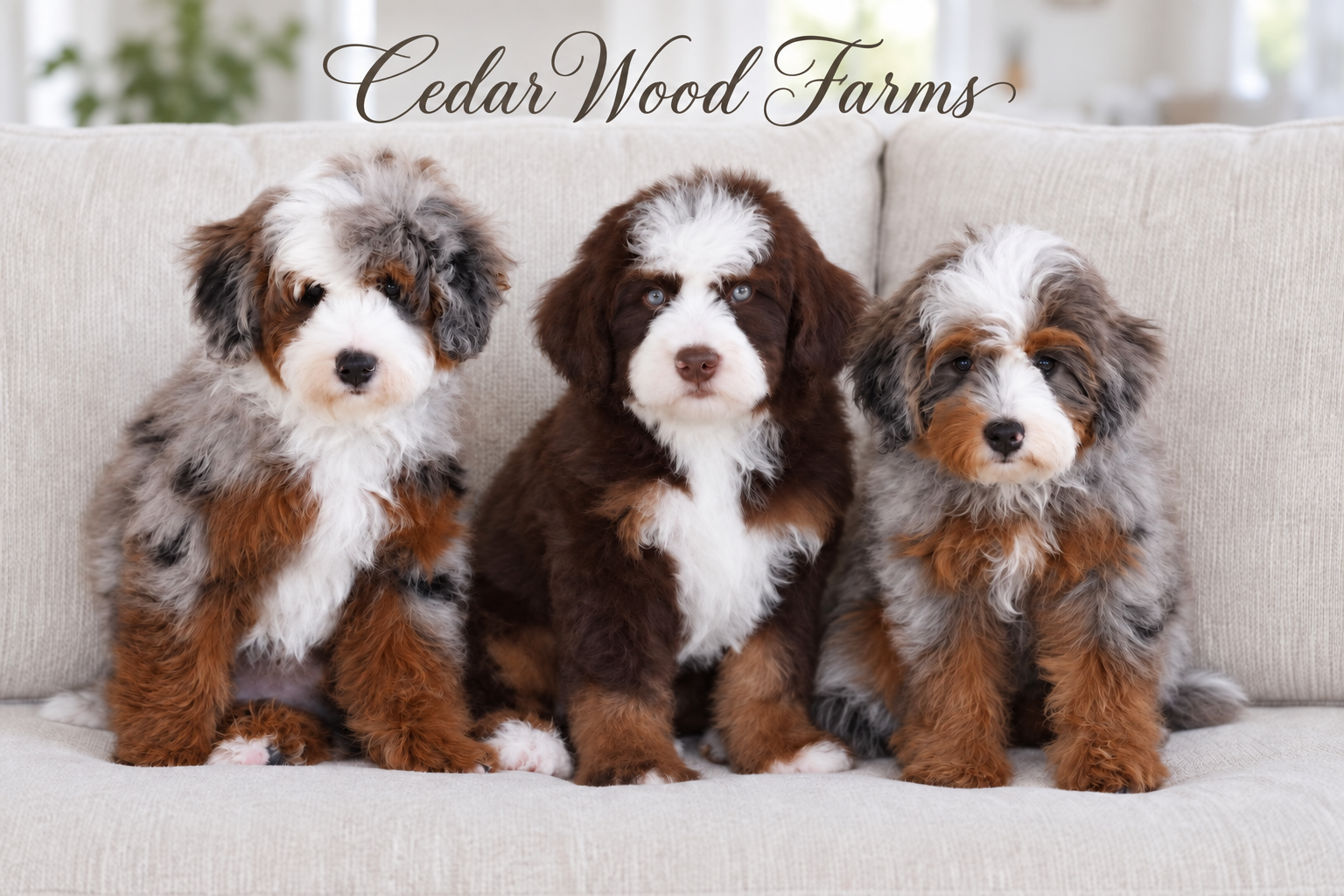
The classic Bernese Mountain Dog pattern carried into the doodle — a black base coat, white blaze, chest, muzzle and paws, and rust or copper points above the eyes, on the cheeks, and on the legs. The most in-demand Bernedoodle pattern and the hardest to produce consistently.
- Common in
- Bernedoodle (signature color), Australian Mountain Doodle
- Does it change?
- The black base can silver out if a fading gene is present. The white and rust placement is fixed at birth.
Caption
Caption
Caption
Chocolate Tri
Also called: Brown tri, liver tri
The same three-color layout as a traditional tri, but the black base is replaced with chocolate. Comes with a brown nose and lighter eyes. A softer, warmer look than the traditional tri.
- Common in
- Bernedoodle, Australian Mountain Doodle, Cavapoo (rare)
- Does it change?
- The chocolate base may fade toward café au lait.
Caption
Caption
Caption
Parti / Red Tuxedo
Also called: Parti-color, piebald
At least 50% white with large patches of a second color anywhere on the body. Distinct from an abstract, which has only small white accents. Every parti is a one-of-a-kind pattern.
- Common in
- Cavapoo, Bernedoodle, Australian Mountain Doodle
- Does it change?
- The pattern is fixed at birth. The non-white color may lighten.
Caption
Caption
Caption
Phantom
Also called: Point coloring, doberman markings
A solid base coat with defined tan or rust points in specific locations — above each eye, on the cheeks, on the chest, down the legs, and under the tail — with no white anywhere. If white is present, it's a tri, not a phantom. Comes in black phantom, chocolate phantom, and silver phantom.
- Common in
- Bernedoodle, Cavapoo
- Does it change?
- Points can brighten as the puppy matures.
Caption
Caption
Caption
Blue Merle
Also called: Dapple, harlequin (a distinct pattern)
A marbled, mottled pattern where patches of diluted gray scatter across a black base. Blue merle dogs often have blue or partially blue eyes and pink or "butterfly" mottling on the nose.
- Common in
- Bernedoodle, Australian Mountain Doodle, Cavapoo (rare)
- Does it change?
- The pattern is stable, though the base can lighten.
Important: Merle must be bred responsibly. Breeding two merle parents together can produce "double merle" puppies with serious deafness and vision defects. We never pair two merle parents — every merle puppy we produce comes from one merle parent and one non-merle parent.
Caption
Caption
Caption
Brown Merle
Also called: Chocolate merle, liver merle
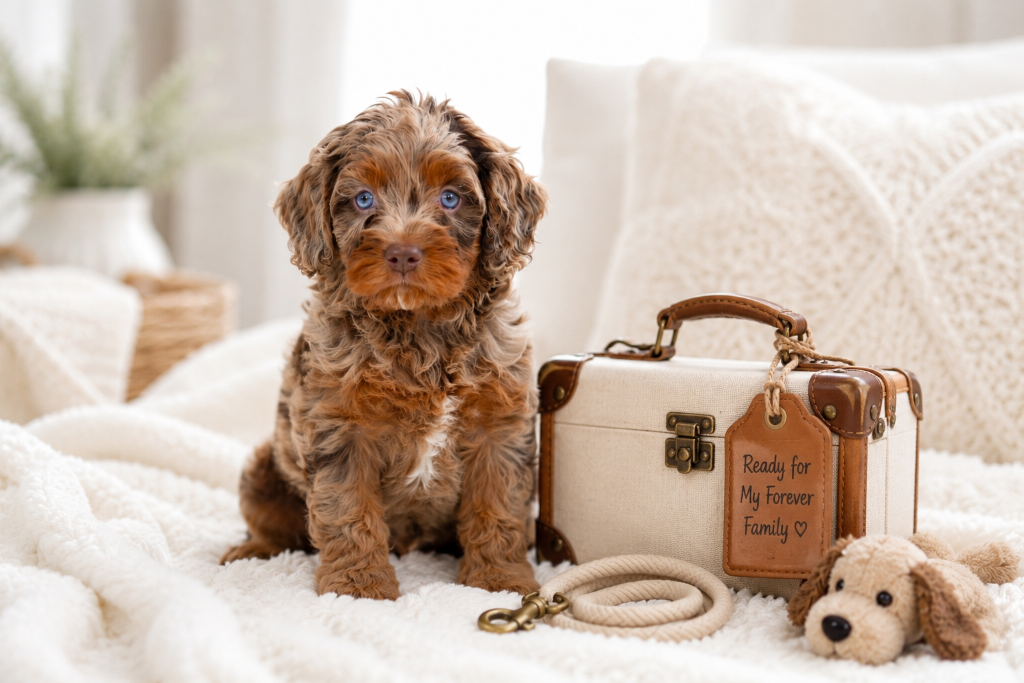
A chocolate or liver base coat with mottled patches of lighter café-brown scattered across it — the brown equivalent of a blue merle. Always comes with a brown (liver) nose, brown eye rims, and lighter amber or hazel eyes. Patches can range from pale tan to silvery café across a darker chocolate ground.
- Common in
- Bernedoodle, Australian Mountain Doodle, Cavapoo (rare)
- Does it change?
- The merle pattern is stable, though the chocolate base may lighten toward café au lait over the first two years.
Important: Merle must be bred responsibly. Breeding two merle parents together can produce "double merle" puppies with serious deafness and vision defects. We never pair two merle parents — every merle puppy we produce comes from one merle parent and one non-merle parent.
Caption
Caption
Caption
Color availability changes with every litter
Contact us to be matched with an upcoming puppy in the color you're hoping for.
Contact UsQuestions Answered